Appointments
Confirm details and arrangements

Reach overseas customers by voice. Connect appointment confirmations, service follow-up and important updates with your existing workflow.
Plan calls around appointments, service requests or established customer relationships.
Consider local time, destination numbers and routes available for the solution.
Assess agent-led or system-initiated calls and confirm caller ID and integration conditions for the actual solution.
Distinguish call states from business outcomes; an answered call does not resolve the matter by itself.
Check dialing, answering, audio and completion, including busy, rejected and unanswered cases.
Agree contact times, retry boundaries and outcome records, with a clear owner for the next step.
For cross-border service, customer support and teams that follow up with overseas customers by phone.
Destinations, caller ID, calling modes, protocols and additional features depend on the agreed solution.
Global outbound calling uses voice calls to reach overseas customers when a matter needs explanation, confirmation or a response. CSHG helps map the process from who to contact and when, through the conversation and subsequent follow-up, so calling fits your existing service workflow.
Organize calls around appointments, service requests or established customer relationships. Define the purpose before contact rather than using unbounded outreach.
Consider local time, destination numbers and available routes. Confirm caller identification and applicable limitations during solution planning.
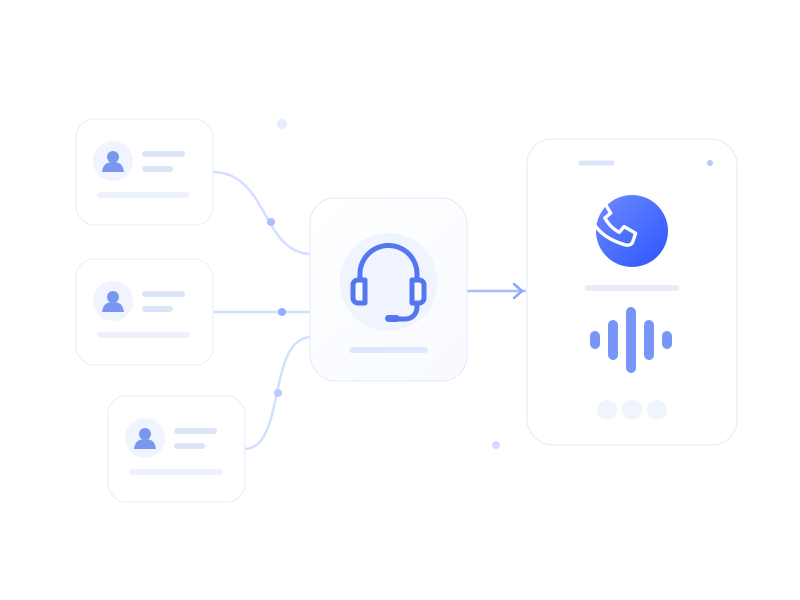
Map agents, customer records and ticket handling before deciding how outbound calling should connect to the workflow.
Ringing, answered, busy, unanswered and ended describe different call states. An answered call does not mean the business matter has been resolved.
Define what happens after an unanswered call, a request for another conversation or a completed matter so the team knows who owns the next action.
Discuss arrangements or clarify details when an appointment, delivery or order needs further attention.
Explain progress and gather feedback on a request the customer has already made.
Arrange a conversation when a text message alone cannot explain the matter or confirm the next step.
Design the connection around your support, customer-record or ticketing systems, linking contacts, call tasks and follow-up outcomes. Define the specific interfaces during solution planning.
Read the integration guideClarify destinations, customer sources, contact purpose, language and expected call volume.
Evaluate agent-led or system-initiated calls and agree caller identification, integration and charging terms.
Check dialing, answering, audio and call completion, including busy, rejected and unanswered cases.
Agree contact times, retry boundaries and outcome records before introducing the process into daily service.
No. Global outbound calling uses voice calls; Global SMS uses text messages. Their communication scenarios and integrations differ.
Separate unanswered and busy calls from requests for a callback. Plan the next conversation around the customer’s time zone and contact preferences rather than repeated consecutive calls.
Caller identification depends on destination, number eligibility and route rules. It must be confirmed for the actual solution; arbitrary caller ID display cannot be promised.
Bring your destinations, contact purpose, customer consent arrangements, expected call volume, languages and system outline. Any recording also needs its own notification and usage requirements.
Share your destinations, customer scenarios and current systems so we can assess an outbound calling path.
Discuss Global Voice